All Categories
Featured
Table of Contents
Any kind of company associated with offering needs to determine where to center its efforts: outbound or inbound sales. Stabilizing outgoing selling and incoming selling will enable you to prep your sales team to supply the best strategies at the right minute. Identifying the difference in between incoming and outgoing sales is important to preparing for the future.
inbound sales and how to toenail the finest practices of each. Outgoing selling is a method that entails pushing your message directly to your potential customers. It involves reaching out to your target market with valuable messaging that increases recognition and urges them to reciprocate and uncover even more. In the outbound selling arena, your group will certainly be making initial call with leads using prospecting tactics such as e-mail advertising, social prospecting and sales call. Some claim outbound sales are dead, yet this is far from the case.
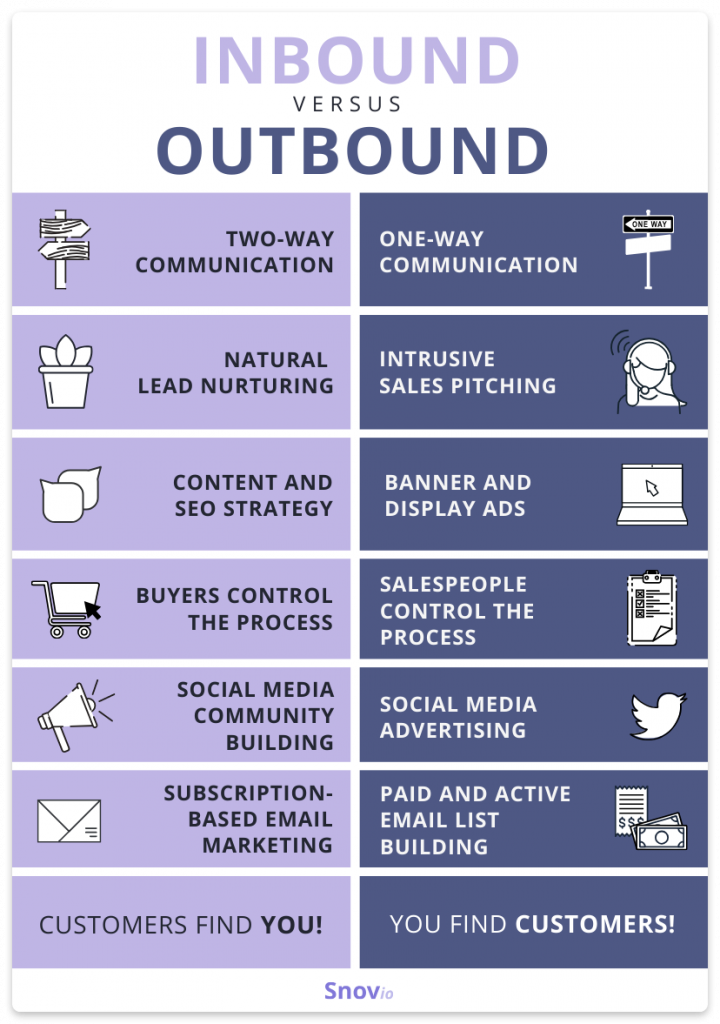
Incoming selling entails certifying interested potential customers. Commonly, these potential customers will certainly discover you and have an interest in discovering more. Your sales team has the job of pulling in these potential customers, certifying them and at some point selling to them. It is a customer-focused method including adjusting to the buyer's one-of-a-kind trip. Many sales teams today concentrate on incoming sales in the debate between inbound vs.
Not known Details About Inbound Vs Outbound Sales: What’s The Difference? - Lemlist
Inbound vs. outgoing sales have substantial differences in the strategies used. The primary difference between outgoing and incoming sales for companies is where the lead came from. An incoming sale begins with the prospect reaching out to your business. They wish to know even more info, get in touch with you on social media, or are currently positive they are prepared to purchase.
An inbound-focused sales group will virtually always have a higher strike price than one focusing on outbound selling techniques. An outgoing sale involves your company connecting to a prospective customer. It normally contains a more comprehensive advertising and marketing technique and focuses on amount over top quality. The distinction between outbound and inbound sales most likely currently has you cleared up on the inbound technique due to the fact that it's much less intrusive and allows you to find a balance in between raising recognition and pushiness.
Developing inbound and outgoing marketing techniques is an intelligent way to raise your general efficiency and create a winning sales method. Numerous best practices exist within sales that can apply to outbound and inbound marketing choices. Embracing both can make you an extra nimble sales team and make sure that you are maximizing your exposure to your target market.
See This Report on Inbound Vs. Outbound Sales: The Key Differences - Gong
outbound sales and can be implemented within your sales group currently. With outgoing marketing, the main obstacles are boosting success rates and staying clear of spam. Advertising to everyone visible is an inadequate strategy due to the fact that it can lead to your brand name losing its reputation and throwing away precious advertising and marketing bucks. To stay clear of spamming and wasting your advertising and marketing spending plan, you need to invest countless hours investigating your suitable target market and where to discover them.
Inquiring about the client's issues, providing a totally free product, or notifying them of an impressive advantage are three ways you can start to produce that rate of interest. The drawback of appearing of nowhere with an offer is many individuals instantly assume these interactions are spam. It's finest to humanize your outreach initiatives, meaning the prospective prospect needs to have the ability to place a face to a name.

Table of Contents
Latest Posts
Getting My How Ai Is Changing Small Business Forever To Work
The 8-Second Trick For Local Marketing Ideas For Veterinary Clinics: A Guide To Boost Your ...
Three Easy Sales Techniques To Get More Clients - Nfpt - Truths
More
Latest Posts
Getting My How Ai Is Changing Small Business Forever To Work
The 8-Second Trick For Local Marketing Ideas For Veterinary Clinics: A Guide To Boost Your ...
Three Easy Sales Techniques To Get More Clients - Nfpt - Truths